Universally, society has finitely socialized global citizens to accept ethnic, gender, socio-economic class and other arbitrary labels as the absolute definition of self. In October, the twin island Republic of Trinidad and Tobago joins India, the Indian diaspora and the world to celebrate the festival of light over darkness, Divali. It is worth noting that the ancestry of the Trinbagonian began epic years ago and emerged through genealogy blending from some Amerindian, European, Indian, Chinese, African and Asian bloodlines. Some might even say that the complexity of our diversity identifies the national citizen as “TBC - Trinidad Born and Confused.” The East Indians arrived to this country as indentured labourers in 1845 on the Fatel Razack (Fath Al Razack), the first ship to bring the Indian immigrants to the island from India. As part and parcel of their contribution to this state, the East Indians brought their style of dress, traditions, customs and lifestyle. They joined other nationalities on the island who were ripped from their respective motherlands and would meet many more before their new home became an independent state where they would be now known as citizens of Trinidad and Tobago.
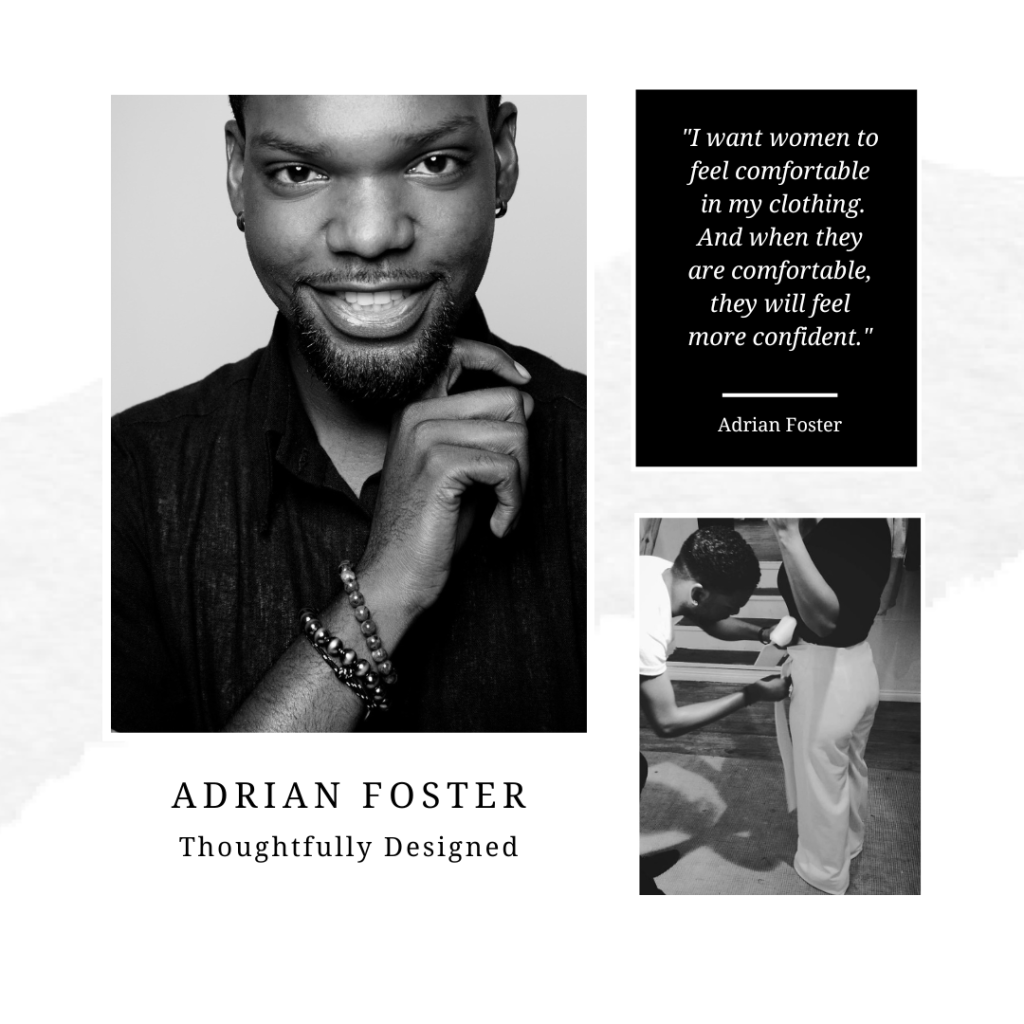
Today, the ‘TBC’ identity crisis is real for the Trinbagonian who feels neither here nor there. They may experience fear of failure to fit in with a specific group(s) or stand out. All hope is not lost because as the Trinbagonians continue their evolution they have become conscious and undeterred in their mission to unlearn the age old, social conditioning by stereotype. They understand that the diversity and complexity of the Trinbagonian lineage represents to the world that which The House of Angostura's rum is renowned for; aged and blended to perfection. Trinbagonians are finding their way to hold their own and to redefine their authenticity of self as per their own terms. Fashion designer, Adrian Foster is just one of the many breaking the bias and this reverberates in his creative work and the extension of self, especially in his most recent contribution, the Indo-fusion sari top and shirt dress.